The exhibition, comprising site-specific interventions inside the Mendrisio Museum of Art, explores the transient perspectives of the historical architectural complex of the Padri Serviti convent. The display comprises three exterior installations in the old Cloister Arundo 1, Arundo 2 and Fluo, one in the grand Salon on the first floor Demo, and a series of printing plates on the walls Matrici. The title of the whole project refers to the Latin used by the order of the Serviti who, in the 15th and 16th centuries, transformed the ancient hospice into the convent that currently houses the Museum.
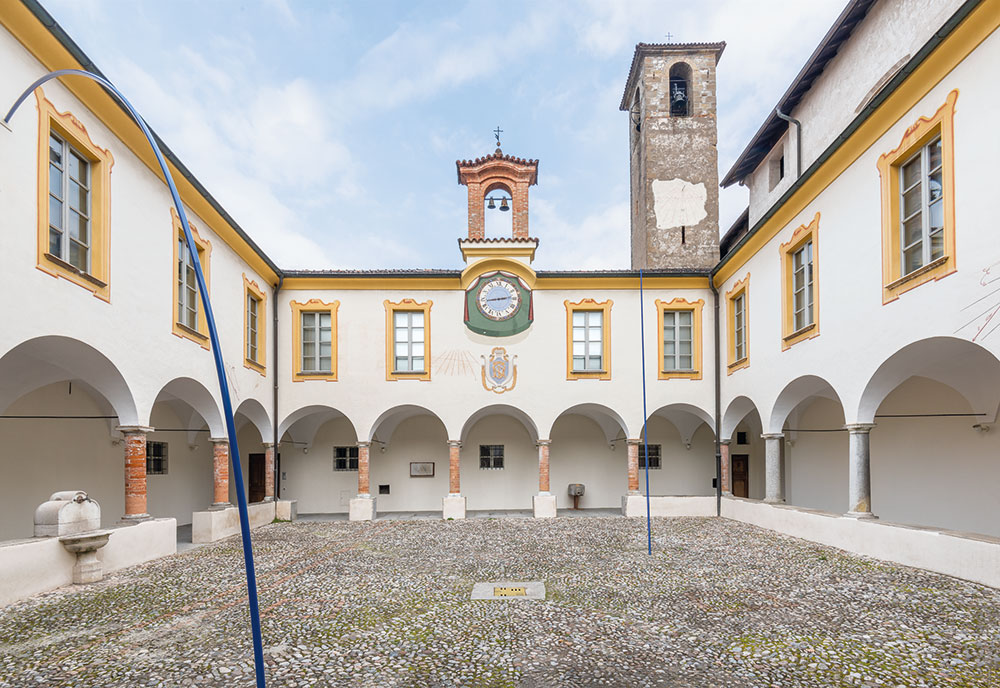
photo: cosimo filippiniIn the exterior environmental installation, the artist elaborates on the arched cloister’s spatial ambiguity (open and closed, religious and architectural space) by inserting, in its almost squared configuration, two indigo-coloured “organisms” Arundo 1 and Arundo 2 rising in different directions and at different heights. The name and propelling force of the straight line and semi-arc evoke the momentum of nature rising above the perimeter of the building, challenging and disrupting its current spatial configuration as a rigidly quadrangular structure and bringing it to the third dimension. Whereas the curbed line runs along the globe like a meridian while also working with the existing architecture, the straight line rises upwards toward infinity (and otherness). Depending on the perspective, the two tubes follow parallel, diverging or overlapping trajectories, like the gushes of an ancient fountain.
photo: cosimo filippini
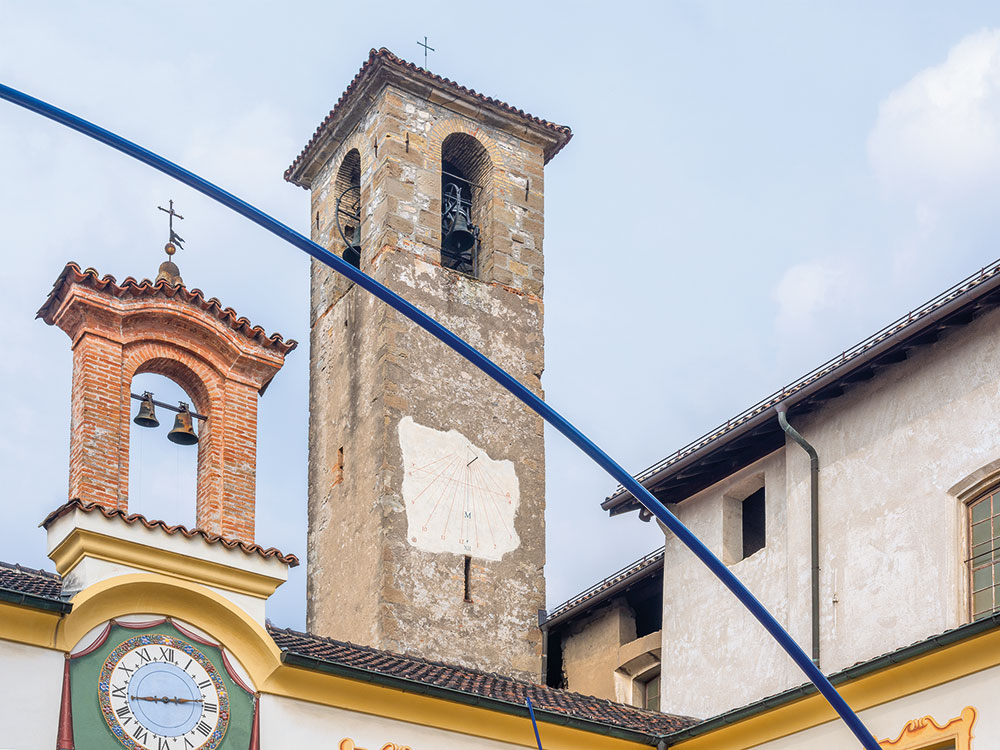
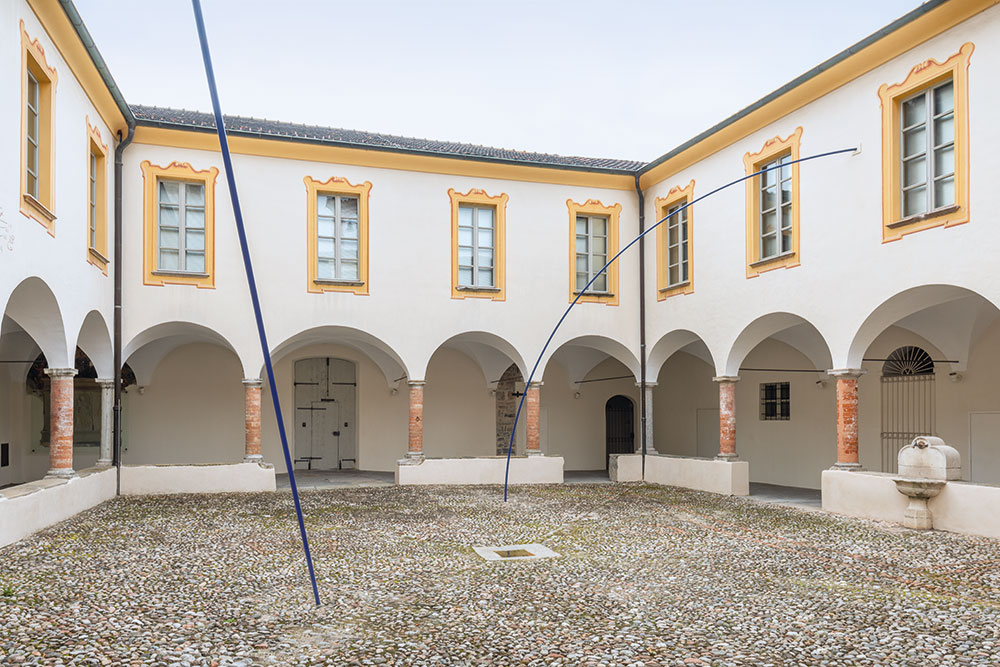
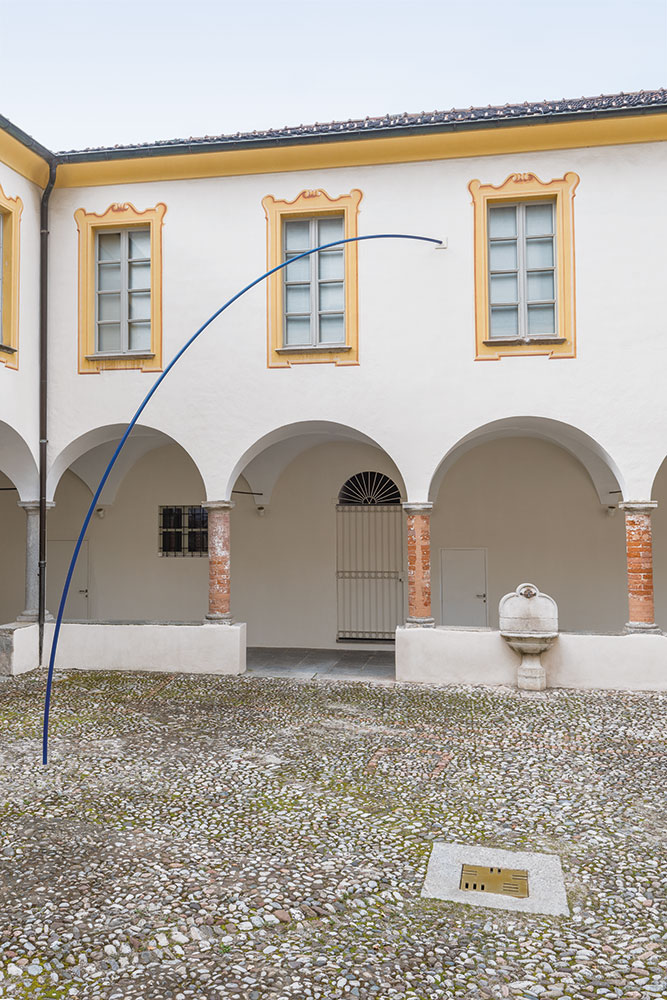
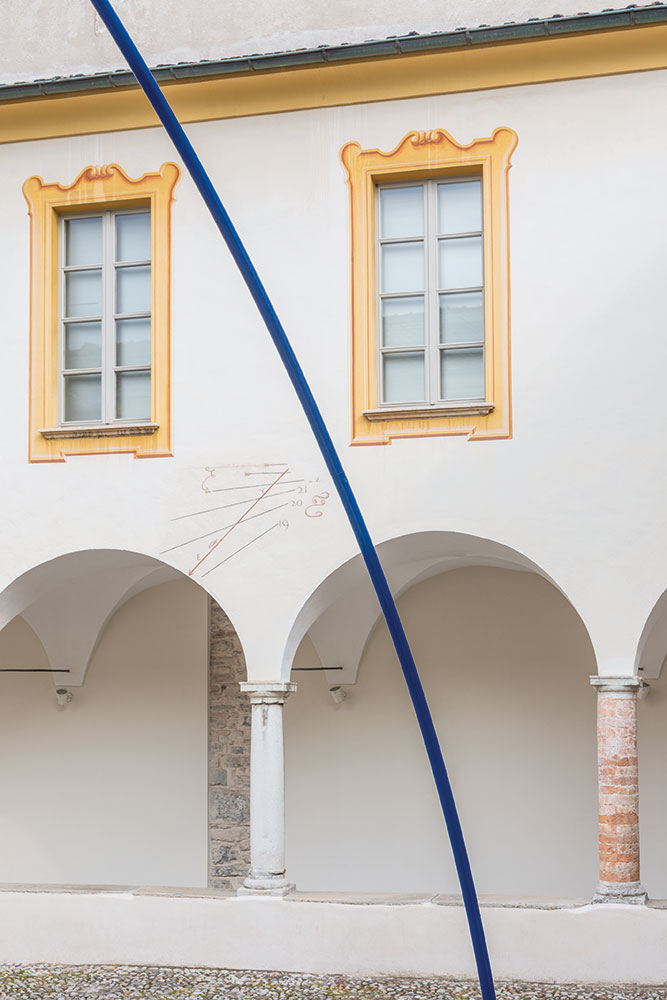
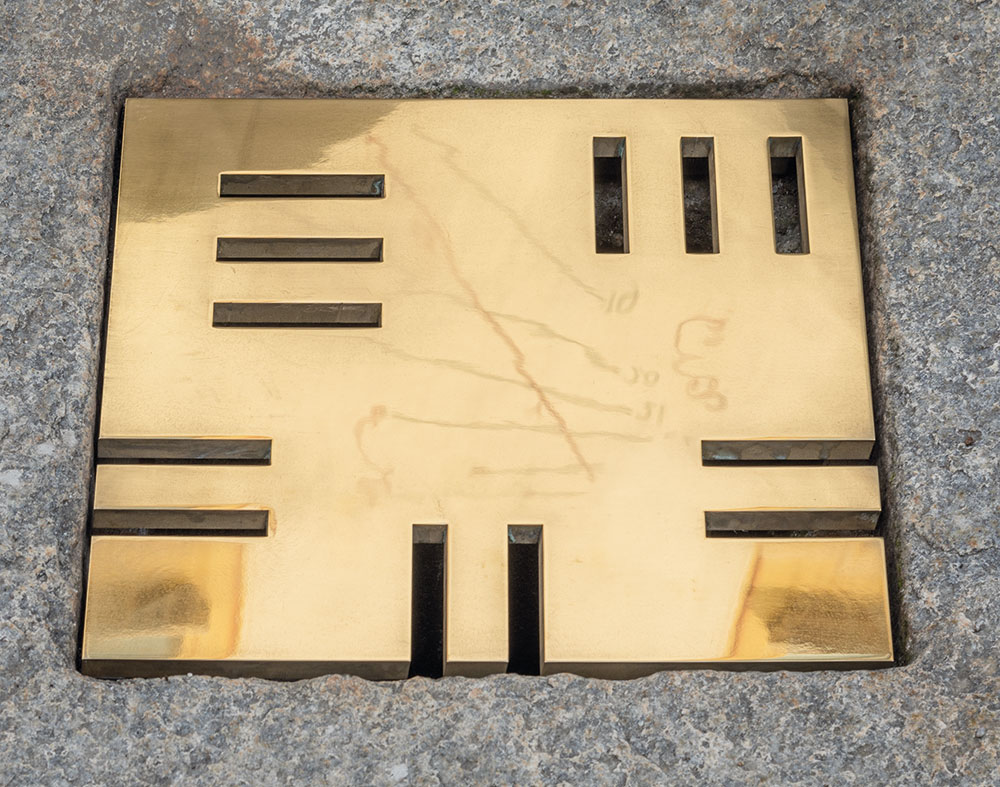
photo: cosimo filippiniThe reference to water draws an invisible link with the third element of the installation, Fluo, the “navel” of the cloister: Tallone replaced the central drain with a brass tile in which she cut 12 openings, similar to the Roman numerals on the clock in front of the building. Rather than showing the time, however, the openings collect time just as they do rainwater, fulfilling a double role – functional and conceptual – of great eloquence. The installations are also meaningfully connected by their colour – indigo blue and gold – that pay tribute to the basic colours of sacred art.
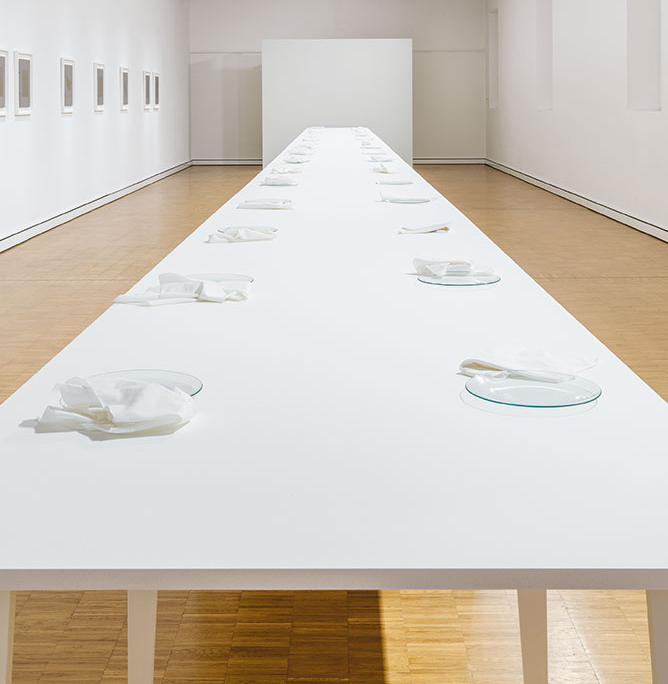
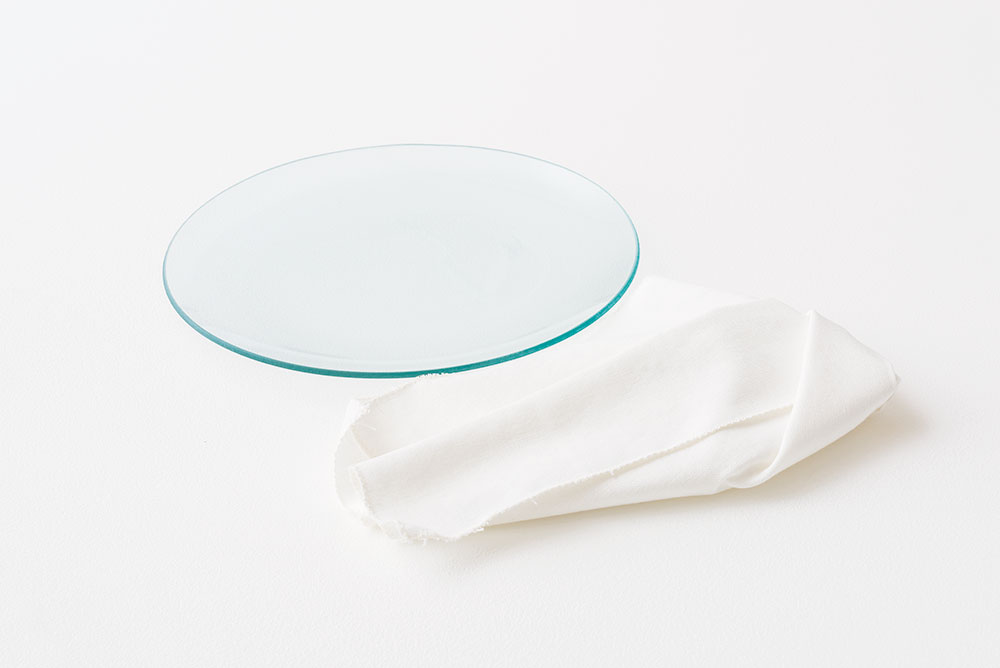
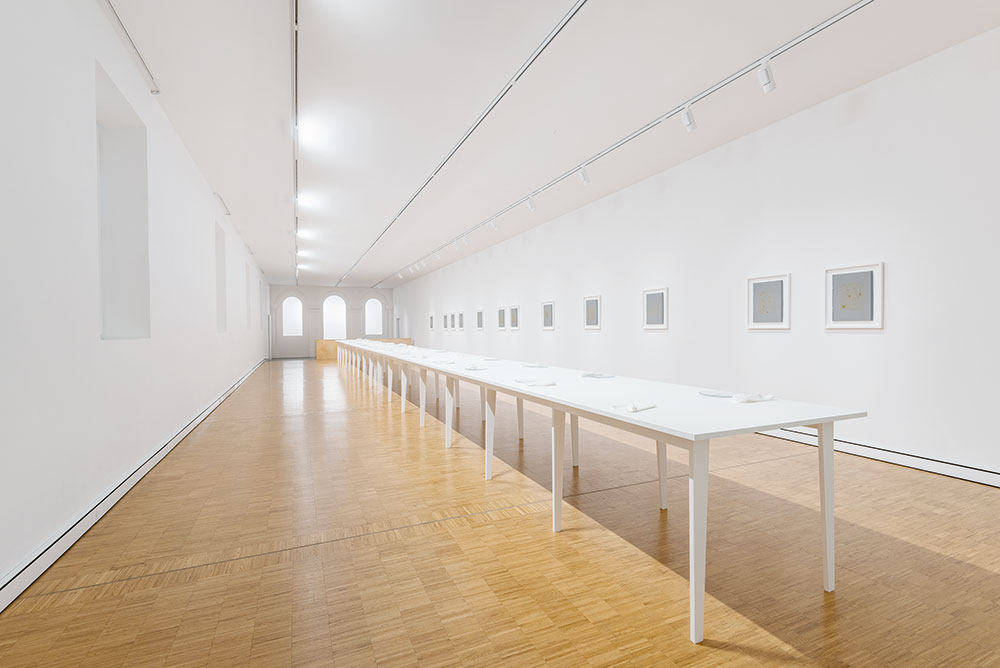
photo: cosimo filippiniThe interior installation implicitly refers to the hypothesis that the Salon, now an exhibition room, used to serve as the Serviti convent’s refectory. The viewer is presented with a series of silent socialisation mechanisms through the representation of a ritual banquet without diners. The setting of the macroscopic, 20-metre-long table is simple and uncanny; the gestures are symbolically fixed in the napkins, folded and starched to preserve the traces of their use. As in the artist’s previous projects, the fabric acquires a supratemporal and collective value as a three-dimen- sional sign of the most private human activities. The absence of diners is also perceived acoustical- ly, as the grand Salon echoes with a silence that evokes the acts of both depriving and sharing: the title, Demo, refers to both a sound sample and a demo-graphy reduced to its minimal expression, shifting the attention from fullness (the explicit action) to emptiness (what is evoked by the table). At a point in history in which we are deprived of most human contact, Tallone invites us to reflect on the sense of space and on the meaning, as topical as ever, of alternative forms of coexistence.
photo: cosimo filippini
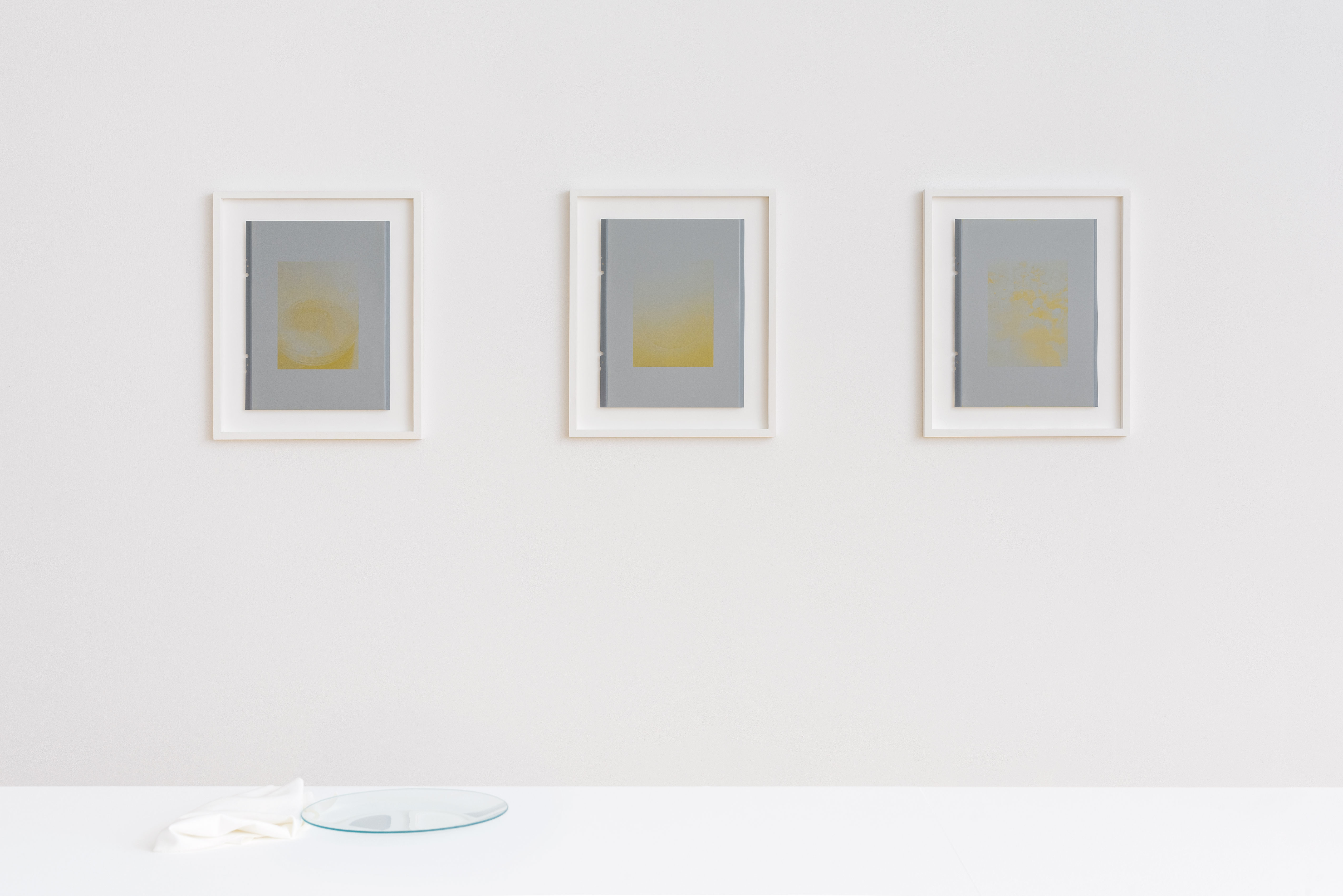
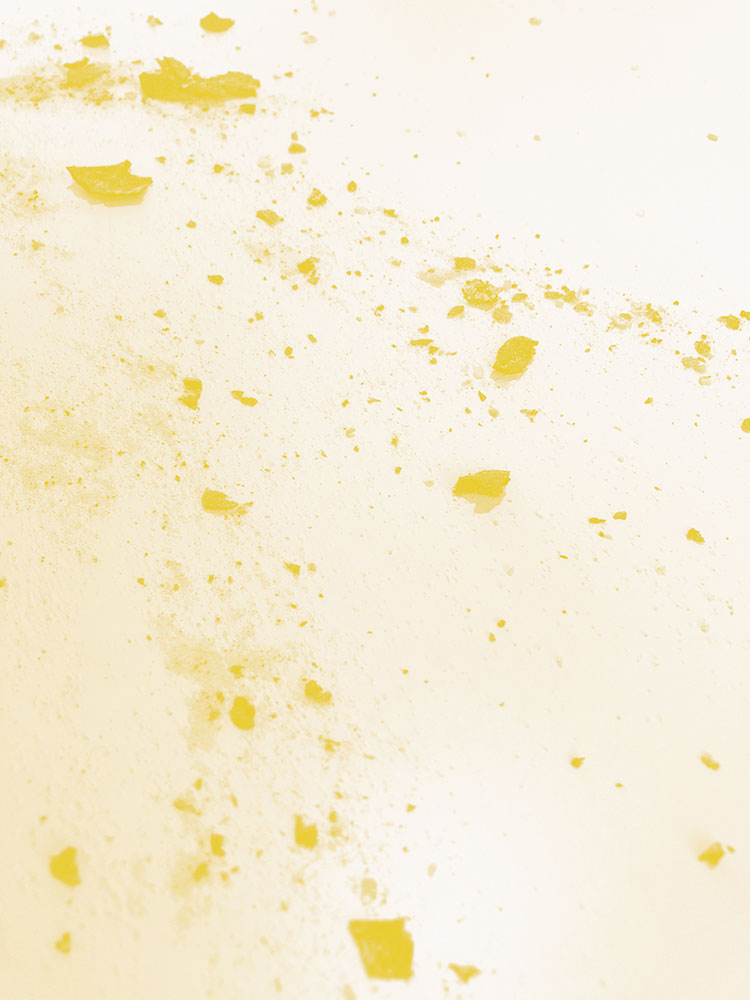
On the longer wall of the same Salon, a series of printing plates reproduces, in warm wheat colours, what remains of the meal: breadcrumbs, traces, leftovers, and shadows. The chosen medium reiterates Tallone’s intent to “reverse” the creative process: the final product is not the sheet of paper but the metal matrix itself, showing the negative image of the moments of a meal that left no trace in the macro-installation.
photo: cosimo filippini
matrice
matrice
matrice
matrice